SUVs and pickups are used in very different ways: some hardly ever leave the asphalt, while others head into the mountains or to work sites on dirt roads every week. So there is no one-size-fits-all solution — the tyre is chosen based on where the vehicle spends most of its time.
1. SUV tyre types
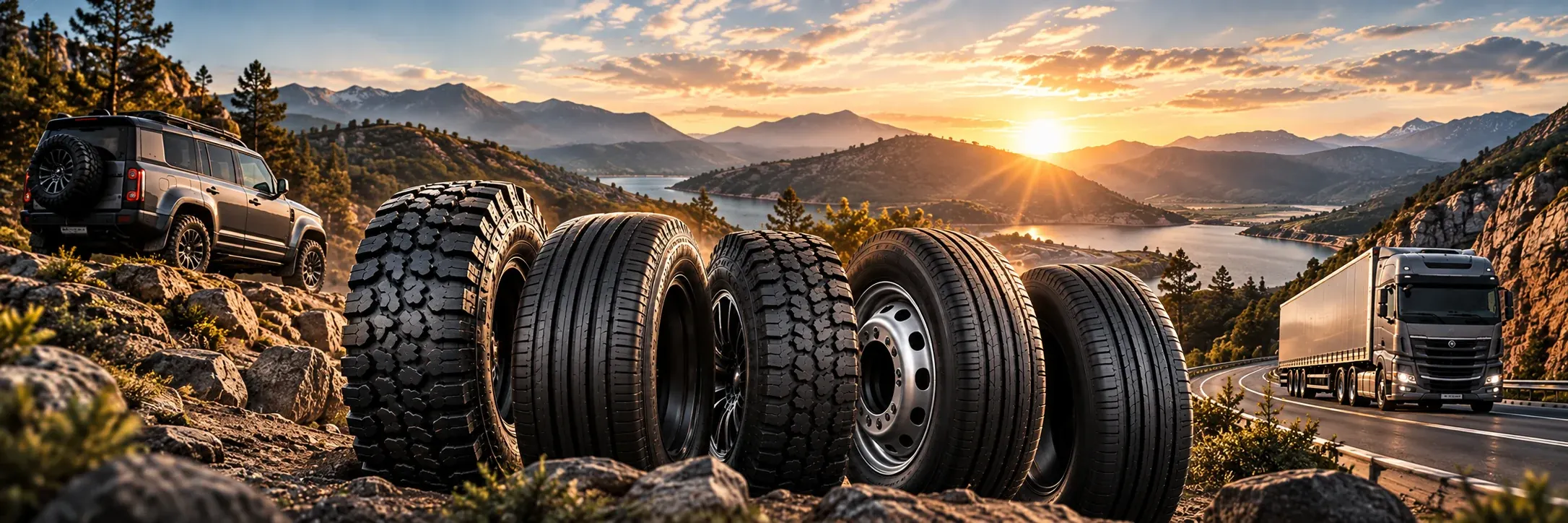
- HT (Highway Terrain) — for asphalt and highway: quiet, economical, with a long service life. Suitable for crossovers and urban SUVs.
- AT (All Terrain) — all-purpose: they hold the road confidently on the highway and cope well on soil and gravel.
- RT (Rugged Terrain) — an intermediate option between AT and MT: more aggressive off-road and still acceptable on asphalt.
- MT (Mud Terrain) — for mud, rocks and serious off-road: large blocks and reinforced sidewalls, but on the highway these tyres are noisy and wear faster.
2. Sidewall strength and load index
An SUV is heavier than a passenger car and often carries a load or tows a trailer. Choose tyres with a sufficient load index, and for heavy-duty use, those marked LT (Light Truck) or with a reinforced sidewall that resists cuts from rocks.

3. Size and ground clearance
Larger-diameter tyres increase ground clearance but may rub against the wheel arch liners when turning and affect the speedometer and transmission. Before fitting a non-standard size, check whether the vehicle manufacturer allows it.
4. Off-road pressure
On sand and soft ground, pressure is sometimes reduced to enlarge the contact patch and avoid digging in. Restore the operating pressure as soon as you are back on a hard surface: driving on deflated tyres on asphalt destroys the sidewall.
5. Climate and season
Summer heat calls for a heat-resistant rubber compound, and for winter trips to the mountains on snow and ice, it is worth having a separate set of winter tyres.
The “Passenger car tyres” you will find SUV models, for example WIDEWAY TERRUX R/T. If you need a different size or tread type, our specialists will help you choose the right tyres.