


Tyres are the only thing connecting a vehicle to the road. Braking, handling, fuel consumption and load safety all depend on them. To make the right choice, go through a few simple steps.
1. Size
The exact size is given in the vehicle documents, on the placard on the door pillar and on the sidewall of the fitted tyres.
- 205/55 R16 — passenger car tyre: width 205 mm, profile height 55% of the width, rim diameter 16 inches.
- 315/80 R22.5 — truck tyre: width 315 mm, profile 80%, rim diameter 22.5 inches.
- 12.00 R20 or 23.5-25 — inch-based designations often found on trucks and special equipment.
2. Load and speed indices
After the size, the sidewall shows the load index (a number) and the speed index (a letter). New tyres must be no lower than those recommended by the vehicle manufacturer: for example, 91V for a passenger car or 156/150L for a truck, where the first number is the load for single fitment and the second for dual fitment.
3. Operating conditions
- Asphalt and highway — rib-pattern tyres: quiet, economical, with even wear.
- Mixed roads — an all-purpose pattern that handles both asphalt and dirt roads.
- Off-road, quarry, field — large blocks or lugs and a reinforced sidewall.

4. For trucks — axle position
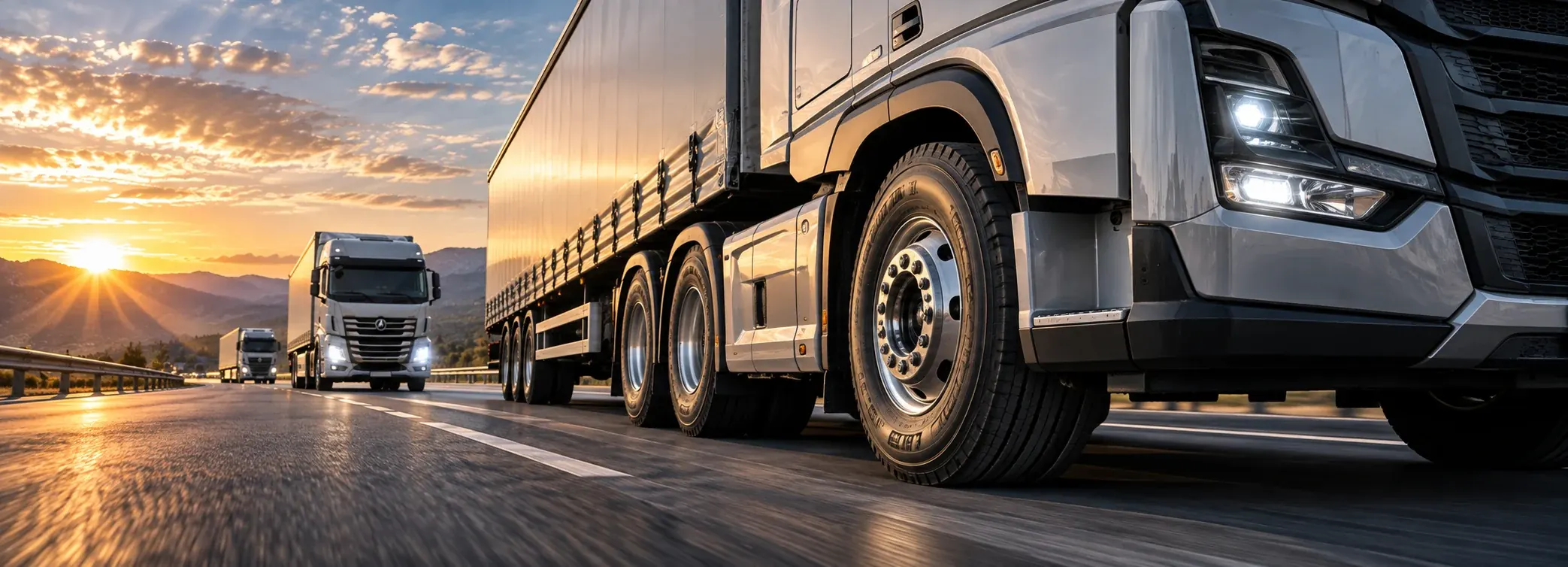
Truck tyres are divided by purpose: for the steer axle (stability and handling), drive axle (traction) and trailer axle (low rolling resistance and resistance to lateral loads). A tyre fitted to the wrong axle wears faster and performs worse.
5. Climate
In summer, asphalt in Uzbekistan heats up to 60 °C and above, so the rubber compound must withstand high temperatures. If you have to drive on mountain roads and passes in winter, it is worth considering winter tyres.
6. A reliable supplier
Buy tyres from an official supplier: this way you get genuine products with a warranty and a recent production date. In the SS TYRES catalogue — tyres for passenger cars, trucks, mining, agricultural machinery and forklifts.